
Recently, a friend of mine has been told that she is to be evicted from her home. This is to do with cladding that is on her apartment. For those of you who may not be aware, we had a serious issue in the UK when an apartment (Grenfell Tower) with a specific type of cladding caught fire, killing people, including a disabled woman trapped on a high floor. It wasn’t pretty. It shouldn’t have happened. And it was totally avoidable.
Since then, the government have rightly made the call to remove this type of cladding from all apartments. However. There is little thought to the people who live in the flats. My friend, Sophie, has severe cerebral palsy. She is non-ambulatory which means that she is unable to move without the assistance of her wheelchair. She also relies on ceiling hoists for personal functions.
Finding accommodation when disabled
Most of the people within her block was given money towards a hotel, food and other expenses. But hotels in the UK rarely have ceiling hoists. This isn’t something that I had ever thought about before Sophie was told she had to move out.
The parties involved in the eviction and the work on the building at first attempted to wash their hands of Sophie. They expected her to find a solution even though they helped the other residents because her disability is too complex. The only solutions they initially offered were:
- manual hoist
- care home
- moving back in with her dad
The manual hoist is not suitable for Sophie long term, and the building work is expected to last longer than a year. It hurts her back. It’s not safe for her. It requires two PAs which would be too excessive for Sophie as she’s independent other than personal care.
If she moved into a care home, she would lose the PA she currently has, and then would have to fight social services to give her a PA again so that she could move back into her flat. I’m sure the council would say they wouldn’t fight it but we all know that they would. Councils absolutely hate having to spend money if they can avoid it.
And moving back in with her dad is not a long term solution. Sophie has commitments in Southampton and her dad lives in Birmingham. Imagine being told: “oh sorry, you can’t go to work anymore because we’re relocating you”.
Read Sophie’s story
Sophie has been having trouble finding a place to stay that is close to her commitments. She has been told she is ‘too complex’ or that relocating her falls out of their remit because of how severe her disability is. The MP, in short and in much politer words, has told her that what she has been told is bull and the people evicting her have a legal responsibility to find somewhere that meets her full needs.
As of yet, it is unclear as to whether a legal lawsuit will unfold. But if you would like to read Sophie’s story, then do click on the link below!
What has Sophie’s eviction notice highlighted?
To me, it has highlighted how poorly we look after disabled people in this country. It wasn’t until Sophie couldn’t find a hotel that I realised non-ambulatory users who cannot use a manual or mobile hoist were not able to holiday like others. It simply wouldn’t be possible.
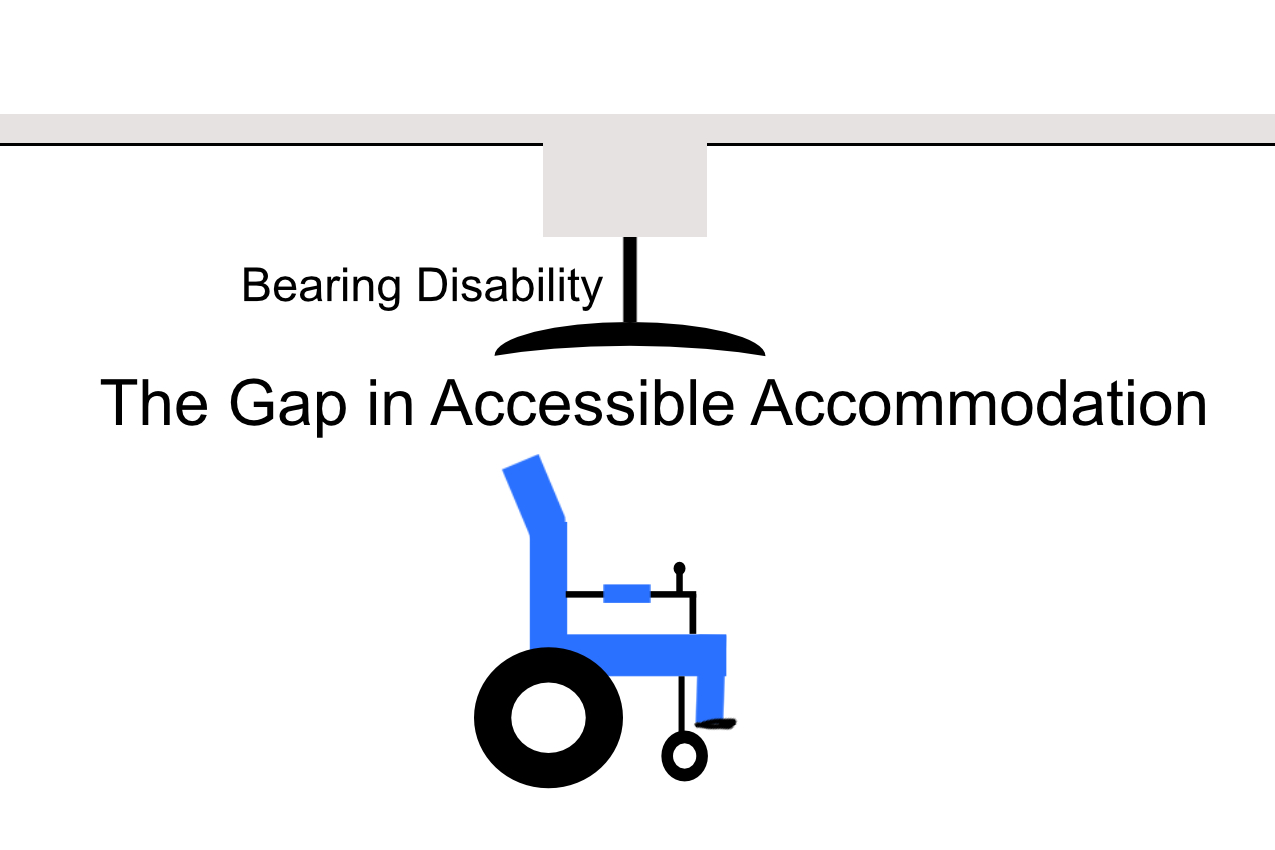
“Accessible rooms” then are not really accessible rooms. They are more “spacious and step free rooms”. Because aside from extra space and a level washroom, there is nothing specific about them that actually helps someone who is disabled. Maybe… maybe that red cord that sets an alarm, though I haven’t been in an “accessible room” for some time that I can’t remember if that red cord is there or not.
It surprises me that we are in the 21st century, we understand that disabilities are a spectrum… and yet, in a room that is meant to promote accessibility, a ceiling hoist hasn’t been installed. It seems like such a simple thing to add that would benefit a heck of a lot of disabled users.
Just like other public hoists, such as changing places, the user can bring their own sling for safety. And if you need the extra space but don’t need the ceiling hoist, then you don’t have to use it. It would make the room more accessible while also hindering no one.
Why aren’t there any hotels with ceiling hoists
Ok… slight exaggeration. There are less than 20 that have ceiling hoists. That’s including the whole of the UK, not just England… not just Great Britain… all four countries and there are less than 20 hotels that have ceiling hoists available to disabled users.
It means those that want to go on holiday are either forced to return to the same places year after year, or only have day trips. Sophie goes to Spain often, so my guess is—like always—the EU have hotels that have ceiling hoists.
Why not the UK? Why are there so few available? My guess is money. But if the room is accessible—fully accessible—then there’s a higher chance that more people would book the room because it actually meets their needs.
Starting a petition
I think that this is such an important topic. The government are constantly saying that disabled people shouldn’t be excluded from society, that they should have the same opportunities. And yet, there are hundreds of thousands of disabled people who can’t even holiday in their own country.
If they do, they have to pay for an extra carer or PA just to operate a manual or mobile hoist. And not everyone can use a mobile hoist due to health conditions that make them unsafe for the individual.
So it’s time for government to step up. It’s time for hotels to become accessible and include non-ambulatory disabled individuals rather than exclude. A bigger room and level flooring is not adequate for all and ignores a large portion of the disabled community.
Sign the petition here (UK citizens only, unfortunately).
One thought on “Bearing Disability: The Gap in Accessible Accommodation”